Summary:
Deciding between coated and uncoated paper can be tough when it comes to printing your marketing materials. Coated paper gives you vibrant colors and sharp images, perfect for brochures and marketing materials. Uncoated paper has a natural feel that’s easier to read and write on, great for letterheads and forms. Picking the right finish helps your printed pieces look better, last longer, and do their job. It’s a simple choice that can save you from expensive reprints down the road.
Updated February 2026
| Time to Read |
|
| What You’ll Learn |
|
| Next Steps |
|
When you’re trying to make a lasting impression with your print material, it’s the details that matter. One of the key decisions you’ll face when submitting your design to us for printing is selecting the right paper.
No matter what printing essentials you’re designing, from business cards to brochures and booklets, your choice between coated and uncoated paper can significantly influence the visual and tactile experience of the final product.
So before you pick your paper, let us give you some expert advice! Our team at Little Rock prints on coated and uncoated paper regularly, and we know all about their respective properties. Below, we’ll tell you everything you need to know to decide between these two equally important (but very distinct) paper types.
What Is Coated Paper?
Coated paper has undergone a process where a coating (often a mixture of clay and other substances) is applied. This creates a “sealed” layer, ensuring that the paper is less porous.
Key Benefits
- Precision: The sealant restricts ink or toner absorption, allowing it to sit prominently on the paper’s surface. This results in sharp, defined, and vibrant prints, especially beneficial for solid colors and detailed designs.
- Texture: Coated stock often feels smoother, providing a polished and professional finish.
- Versatility: Due to its clear printing, it’s adaptable for a variety of finishes, ranging from matte to glossy.
What Is Uncoated Paper?
Uncoated paper, devoid of the additional sealant layer, has a natural, porous texture. This means it absorbs more ink or toner.
Key Benefits
- Aesthetic Appeal: The saturation of ink into the paper grants a softer, warmer, and organic appearance. The absence of glare makes it particularly appealing for vintage or artisanal projects.
- Readability: Its glare-free nature makes uncoated paper the top pick for materials heavy in text, ensuring comfortable reading. This is why many novels and academic textbooks prefer this type.
- Feel: It offers a tactile experience, with its rougher, textured finish, resonating authenticity and craftsmanship.
Read More: Matte vs Glossy Paper: Best Use Cases
When to Use Coated vs Uncoated Paper
| Print Goal | Best Paper Choice | Why It Works |
| High-impact marketing materials | Coated paper | Enhances colour saturation and sharp imagery |
| Photo-heavy designs | Coated paper | Prevents ink absorption, preserving detail |
| Product packaging and promotional inserts | Coated paper | Provides durability and a professional finish |
| Writing surfaces (forms, notebooks, surveys) | Uncoated paper | Ink absorbs easily and prevents smudging |
| Text-heavy documents and books | Uncoated paper | Reduces glare and improves readability |
| Rustic, handmade, or premium tactile branding | Uncoated paper | Adds natural texture and authenticity |
While both types of paper have their merits, the nature of your project will guide your decision. If you’re looking for vivid imagery, clarity, and a professional finish, coated paper should be your go-to. On the other hand, if you desire a more natural appearance, emphasizing text and a tactile experience, uncoated paper will serve you best.
Remember—whether you’re using coated or uncoated paper for your design, Little Rock can help you print it! We stock a paper library with plenty of options for each type, and our team knows how to print on both kinds for best results.
Frequently Asked Questions about Coated vs. Uncoated Paper
Is coated or uncoated paper more expensive?
Our prices vary depending on what you’re printing, along with factors like thickness and quantity. However, uncoated paper tends to be more expensive than coated paper since it has more fiber per pound than coated paper does.
How does each type of paper react to digital vs. offset printing?
Coated paper generally fares well with both digital and offset printing and offers sharp images. Uncoated paper might show slight variations in color saturation (especially in digital printing) due to its absorbent nature.
Does coated or uncoated paper weigh more?
Coated papers tend to be slightly heavier due to the added coatings. However, this is usually not noticeable unless you’re comparing similar grades side by side.
Can I use both types of paper in one project (like a booklet or magazine)?
Absolutely! Mixing paper types can add a dynamic touch. For instance, using coated paper for image-heavy pages and uncoated for text-heavy articles can create a rich tactile experience.
To do this with Little Rock, enter special instructions when placing your order. We’ll reach out to confirm the mixture you want before your design goes to print.
Do inks or designs fade quicker on one type of paper compared to the other?
Coated paper, due to its sealant, can provide a barrier against environmental factors, potentially leading to longer-lasting prints. However, the lifespan of a print also depends on how you treat the finished product—as excessive moisture or exposure to direct sunlight are never good for ink.
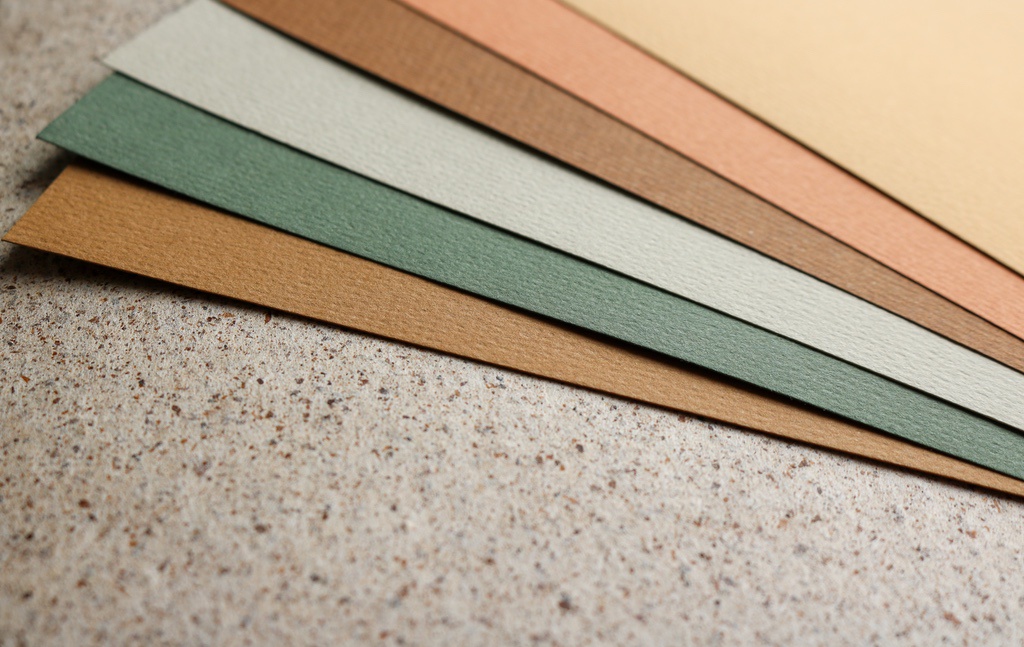
Choosing Your Paper Type with Confidence
The best way to know what kind of paper will work for your project is to order a free paper sample kit from Little Rock. We’ll ship an entire catalogue to your door with all the paper types we offer for our print projects (as well as sticker, banner, and poster materials).
Once you’ve had a chance to see your options up close and find out how each one feels, you’ll be able to place your order knowing it’s going on the best paper for your needs.And if you need further questions answered before ordering, just call our team. We’re here to help!